
The following is a biography of Linda Blagrave as was dictated it to me after many years coercion. Linda was a lady of much talent and of very strong character, not always easy to deal with – you just had to use the right approach.
Born in the country, close to nature,
God’s gift to me is what art has been.
With a love for every living creature,
I follow the path of my childhood dreams.
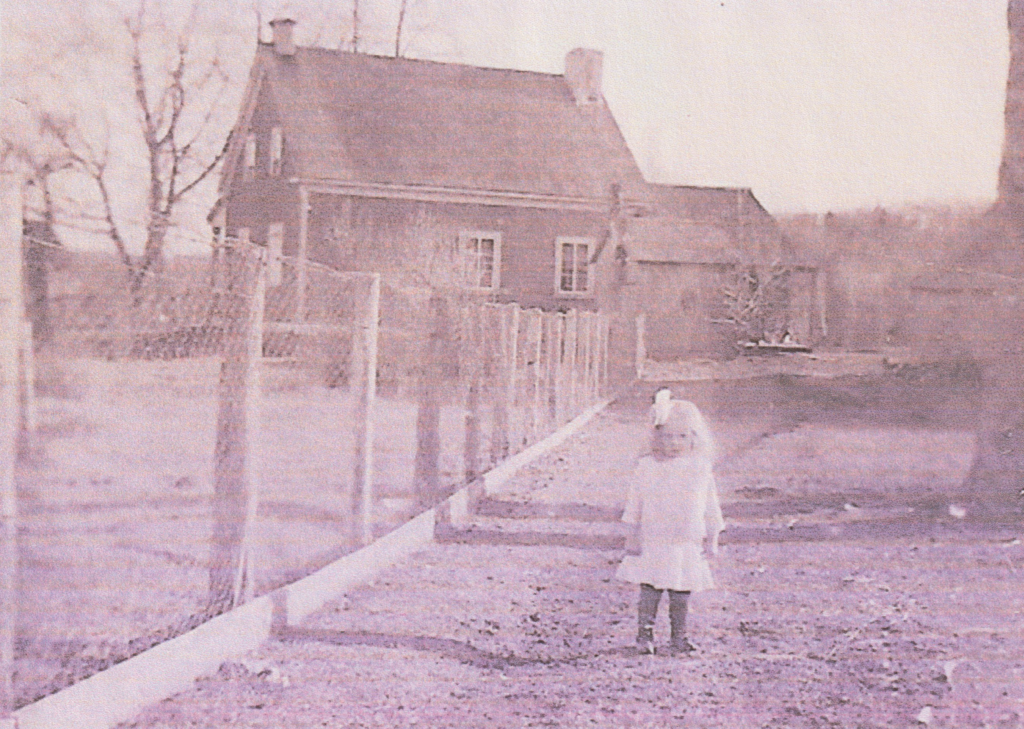
A young Linda standing in the entrance to the house where she was born in on St. Alphonse Road.
Linda (Malinda) was born in 1914 in the small rural community of Rawdon, Quebec, the only child of a farming couple who, according to Linda, seemed to have been very advanced in the manner of bringing up a child.
Goals were set high, reprimands rare. She was never told she had to do something but was always encouraged to try.
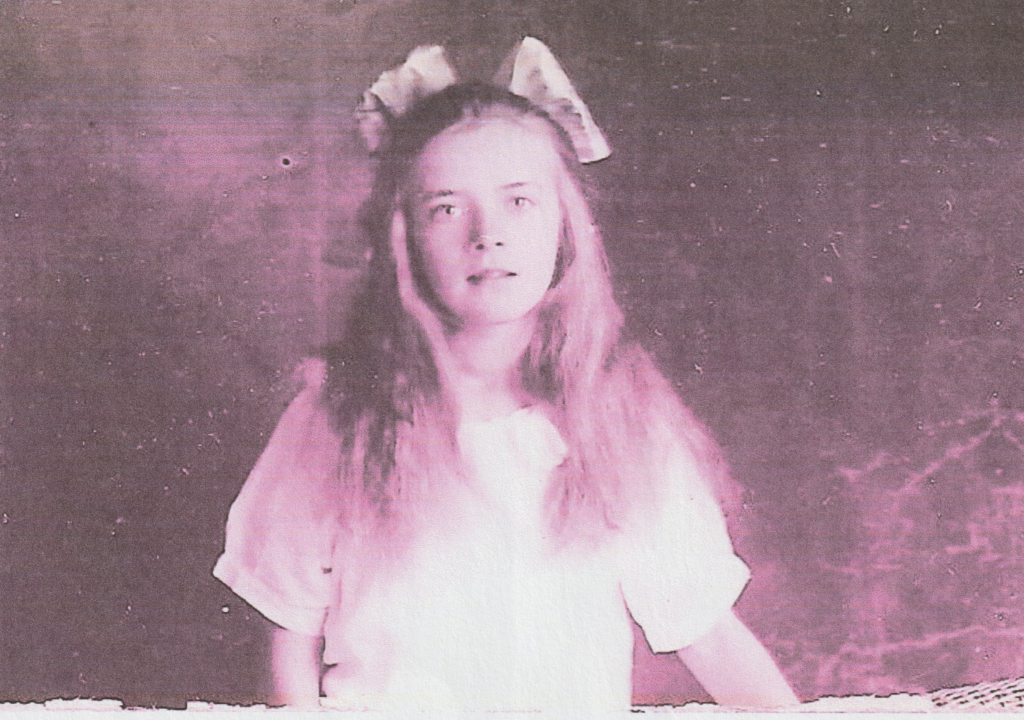
Early on her mother realized her daughter had a natural talent and instinct for drawing and colouring. Enjoying these activities herself her mother encouraged this interest in many ways.
One day, when Linda was still relatively young, her mother was painting the kitchen walls. When her mother had finished there was a small amount of paint left over.
Linda was handed the can and was told she could paint the face of a large, flat rock across the road from the house and visible from the road.
This Linda responded, despite being somewhat apprehensive about the result, after all in the 1920’s horse and buggy, were the only means of travel along this road. She was less than satisfied with the result but much to her embarrassment passerbys, neighbours, never failed to comment these drawings.
The paintings became known as “Linda’s Rock”, a landmark and point of direction for many years to come.
The farm was sold and in the early 1940’s was purchased by the Causebon family.
Over many years having passed the paint on the rock had become almost invisible. The youngest son, George, took it upon himself to restore the painting. His painting was very successful and once again traffic, at this time mostly cars, slowed down or stopped, to see “Linda’s Rock”.
Sadly the farm was sold and the new proprietors showed no interest in the farm nor the paintings on the rock as they slowly faded away.
Surely some one, some where took a photo of the rock, are there any copies remaining? But where? I am sure
But let’s get back to Linda.
Once in school to her great delight Friday afternoons were dedicated to art work. A pencil, a piece of drawing paper and a small box of water paints were the only tools available in this small country school.
The teachers, seemingly none of them trained in art, might, or might not, give a short lesson on form or shape, etc. before the children were left to create their own drawings.
Very quickly her talent was recognized and applauded and her particular dedication to drawing and painting was encouraged. Her drawings were always chosen to be tacked on the wall.
The following photos were taken by Marjory Copping, a long serving teacher, who had the foresight to preserve Linda’s work and share it with others.

White chalk was used to post the lessons on the board, but a box of coloured chalk was stored in the teacher’s cupboard for use on special occasions such as Christmas and Easter. For such occasions Linda would be asked to draw a mural on the downstairs classroom for the lower grades nd allto enjoy.
At Christmas time a colourful Santa and his reindeer were soon flying across the board. At Easter a large white bunny hopped across the board with his basket of brightly coloured Easter eggs.
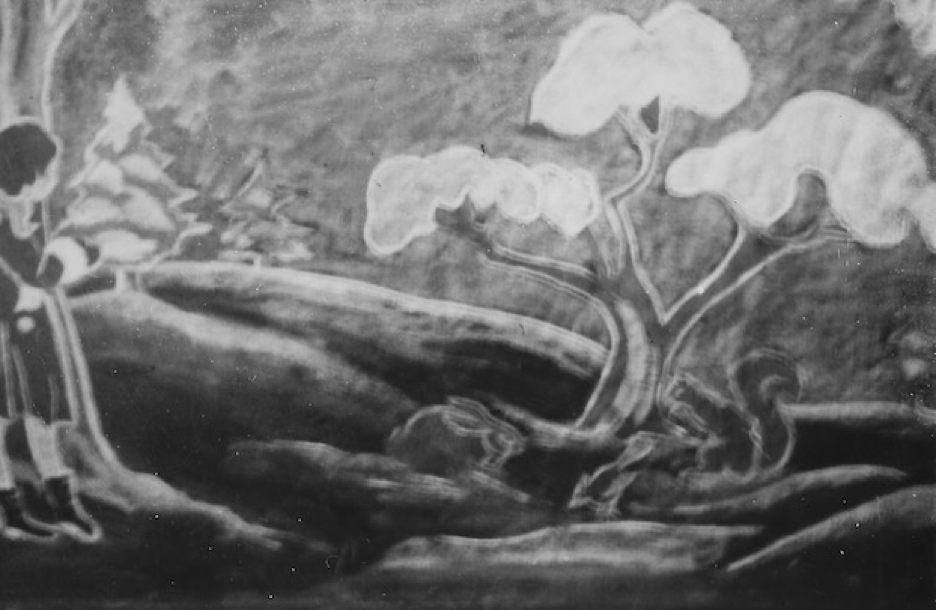
This scene was dedicated to the arrival of spring.
For many years these magical scenes created by Linda’s deft hand were recalled with fondness.
Linda’s father died suddenly August 4, 1935 leaving his wife and daughter with only a boarding house for income.
The farm had been sold and a house in the village, kitty corner to his brother, Isaac was purchased. Isaac was her father’s brother, his wife Maggie Boyce was her mother’s sister}
Gray Gables still stands but Isaac’s house (one of 5 houses built of bricks produced in Rawdon) was demolished to enlarge the ambulance service.
Under the circumstances Linda did not expect much for her 21st birthday in October how ever to her surprise her mother managed to give her a set of oil paints.
To that time Linda had used water paints colours and had no experience with oils. With her usual diligence
she set about discovering the art of oil painting and mastered the technique without having the luxury of professional guidance.
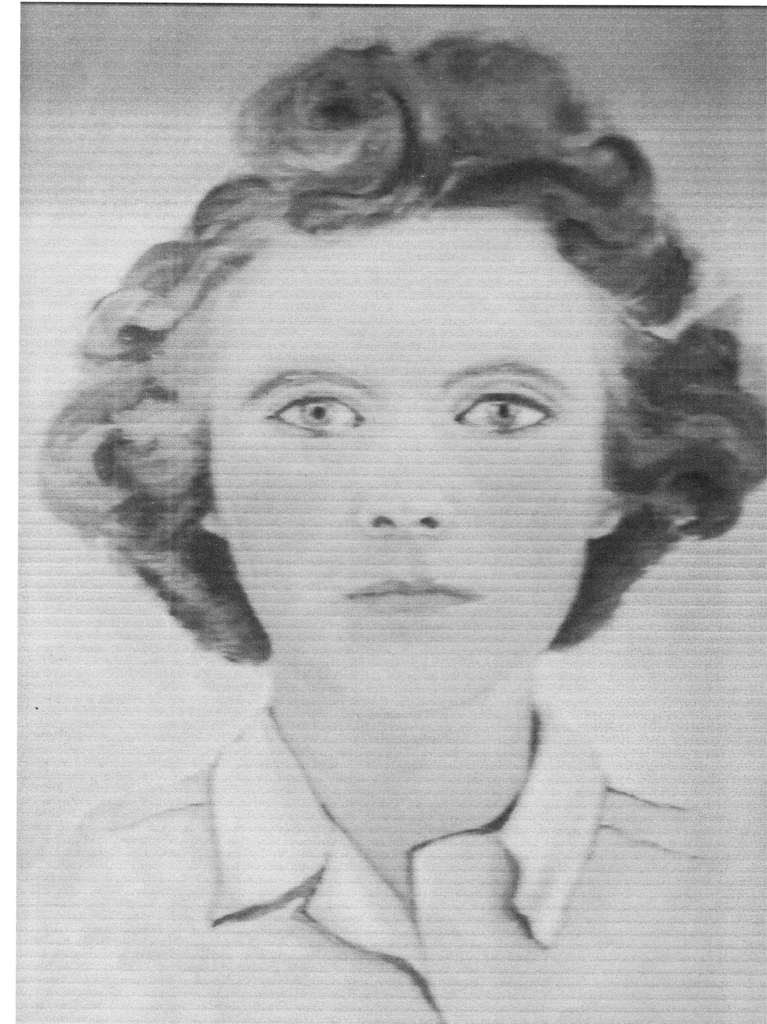
A self portrait done in oil in 1944
The boarding house was large and expensive to heat in the long, cold winters without an income.
Rawdon did not offer a possibility of Isaac had a building on Pine Avenue with rooms rented to students. He offered his sister-in-law and niece one of the rooms to allow Linda to train as a nurse’s aide at The Queen Elizabeth Hospital.
1946
Linda it was the first time in her life she left Rawdon and she found it very difficult. Nevertheless she graduated at the top of the class and was soon working steady both in the hospital and in private homes.
This became a regular routine, the summer in Rawdon, the winter in Montreal.
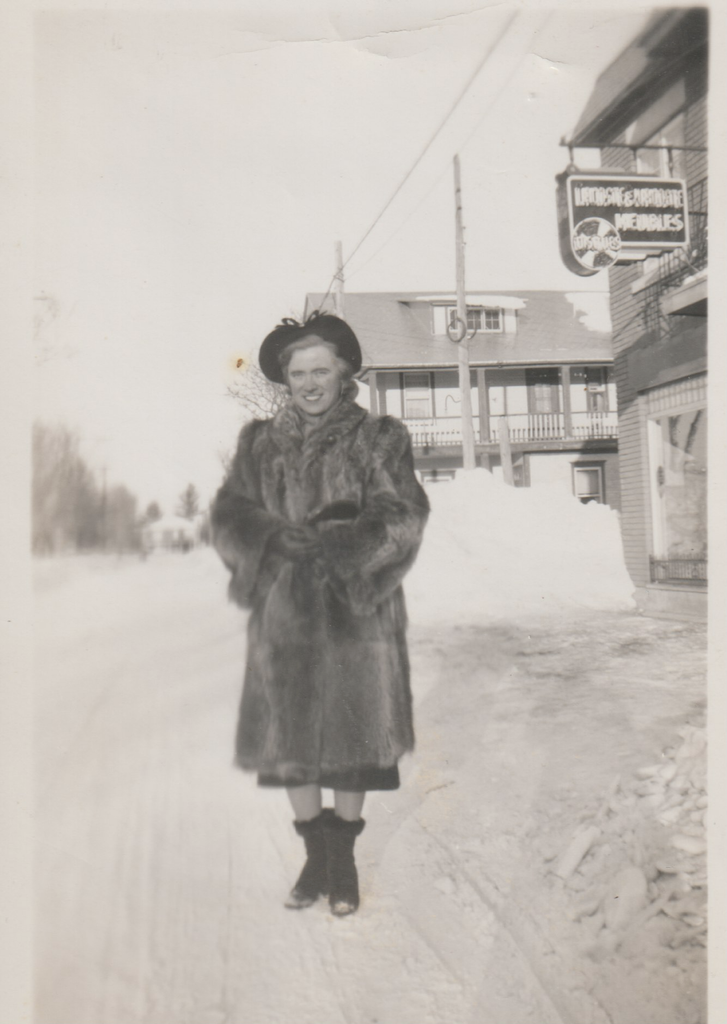
1946 The Fur Coat
Despite working long hours, Linda found time to paint, even if they were very small. Soon she realized there was a market for her work. Linda longed for a fur coat but she realized her income did not extend to supporting herself and her mother.
A fur coat was out of reach until she realized she might be able to sell enough paintings to cover the cost of a fur coat.
Every spare minute was dedicated to painting until 19 of these small paintings covered the price of a fur coat.
Despite working long hours, Linda found time to paint, even if they were very small. Soon she realized there was a market for her work. Linda longed for a fur coat but she realized her income did not extend to supporting herself and her mother. A fur coat was out of reach until she realized she might be able to sell enough paintings to cover the price of a fur coat.
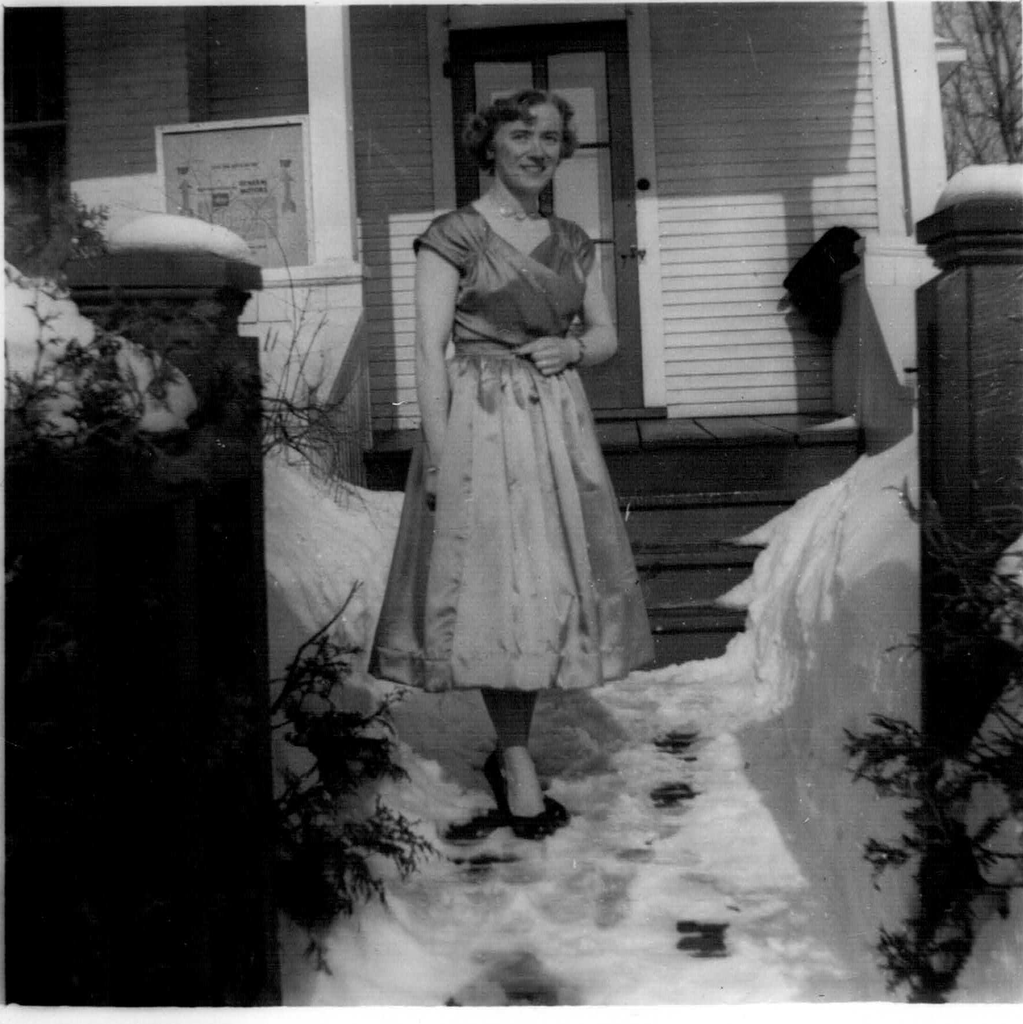
In Rawdon her paintings could be found not in local homes but on walls across Canada, the United States, and Europe. In 1936 guests at Gray Gables praised her work, and purchased her paintings.
Eaton’s art department became aware of Linda’s paintings and put several pieces on display in the Foyer des Arts on the 9th floor of Eaton’s Store on Ste Catherine Street in Montreal, The Royal Gallery on Sherbrooke, Le Coin des Arts in the Windsor and Central train stations, Rolland & Gemst Galleries.
Although she was never fortunate enough to be able to dedicate to painting full-time every spare hour that Linda put her gear in the car and headed for a place she could paint.
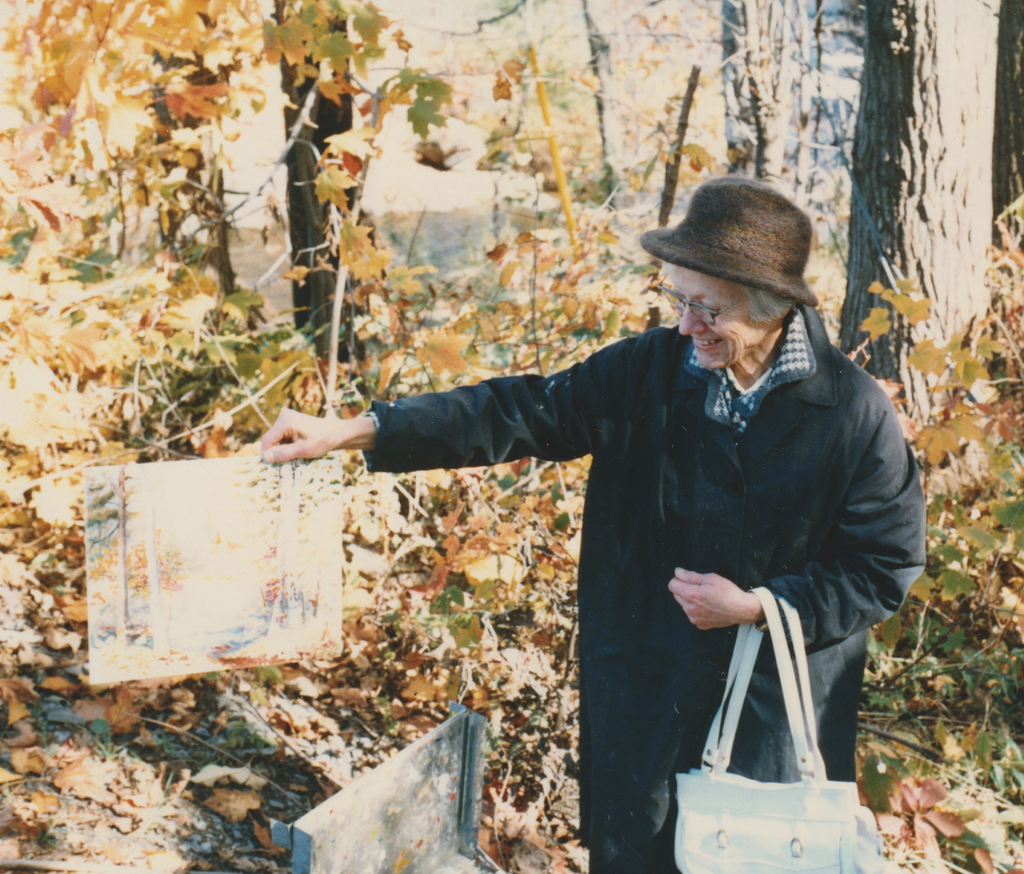
Despite all this, Linda had more than painting on her mind. She was proud to say she was the first member to sign onto the Rawdon Artists Circle founded in 1960 by A. Olesko-Ferworn and Denise Rowan. Six of her eight paintings displayed in the 1st Annual Exhibition were sold!
Although Linda felt very timid in heart when she truly believed in something she was definitely strong in character, it was her way or no way! One just had to know how to take her.
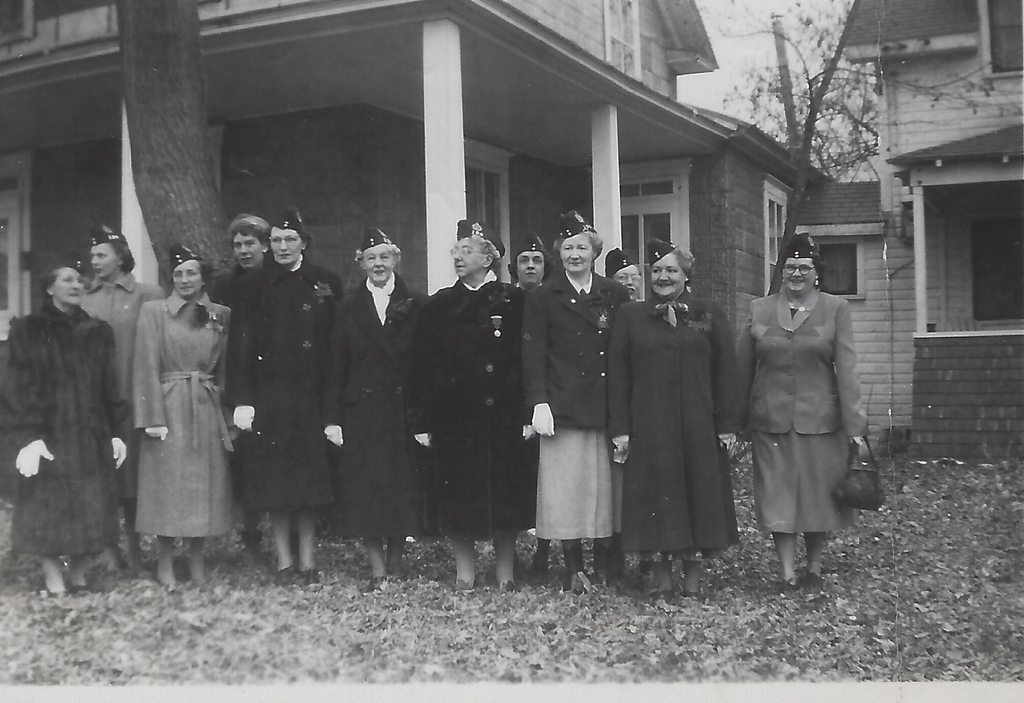
Linda was not just an artist, she was active in politics at all three levels, representatives municipal, provincial and federal electorates heard from her. All soon found out they had better respond or there would be more letters or calls on the way.
During a monthly meeting of the village council the subject of a decent chair for the secretary was set aside.
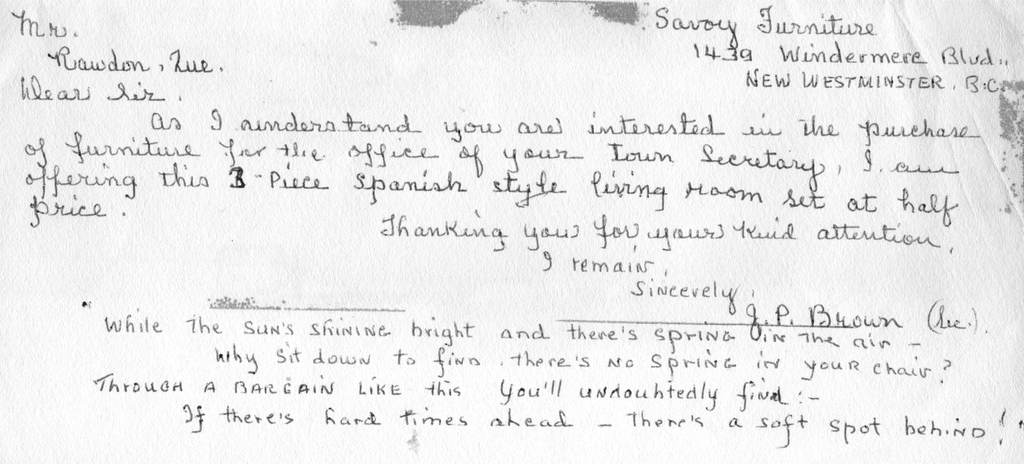
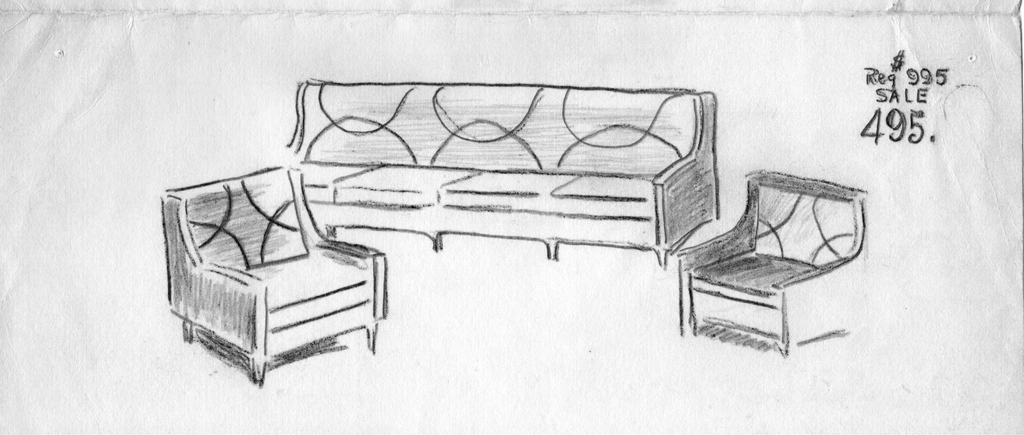
At the next meeting in the correspondance the following letter was read out. To the dismay of the council a great roar of laughter and guffawing shook the hall.
At the next assembly the secretary was proudly sitting on a new chair!
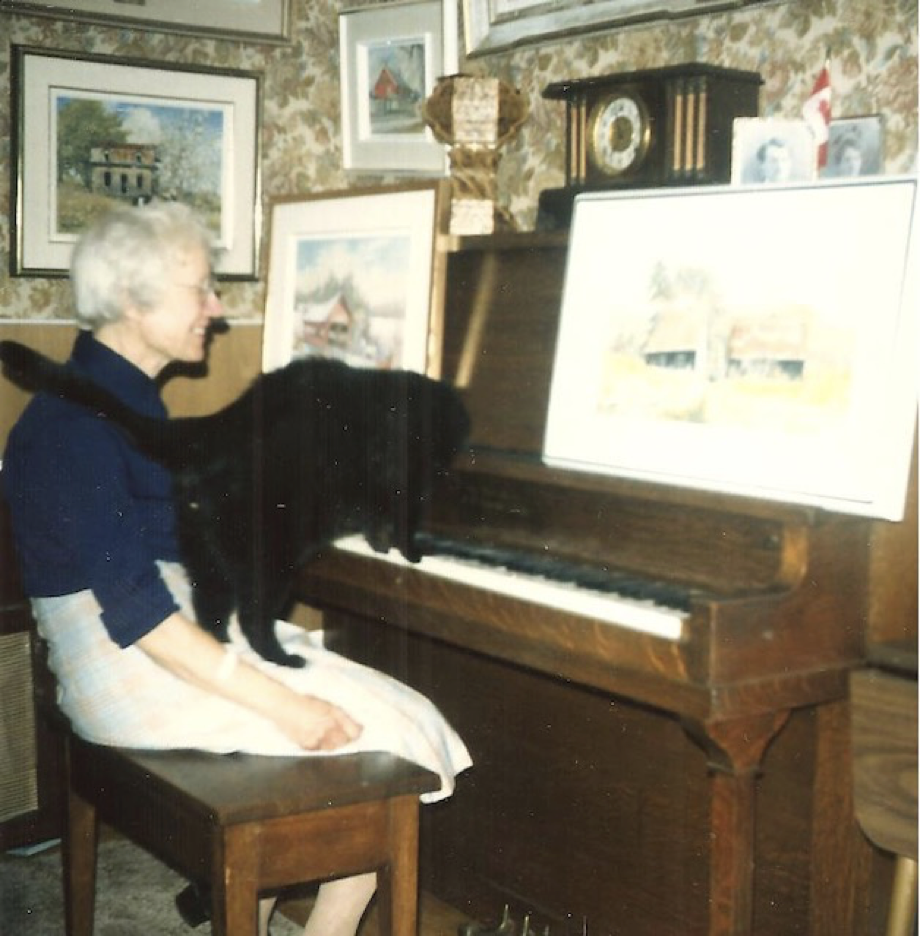
Linda with her favourite cat helping with the music.
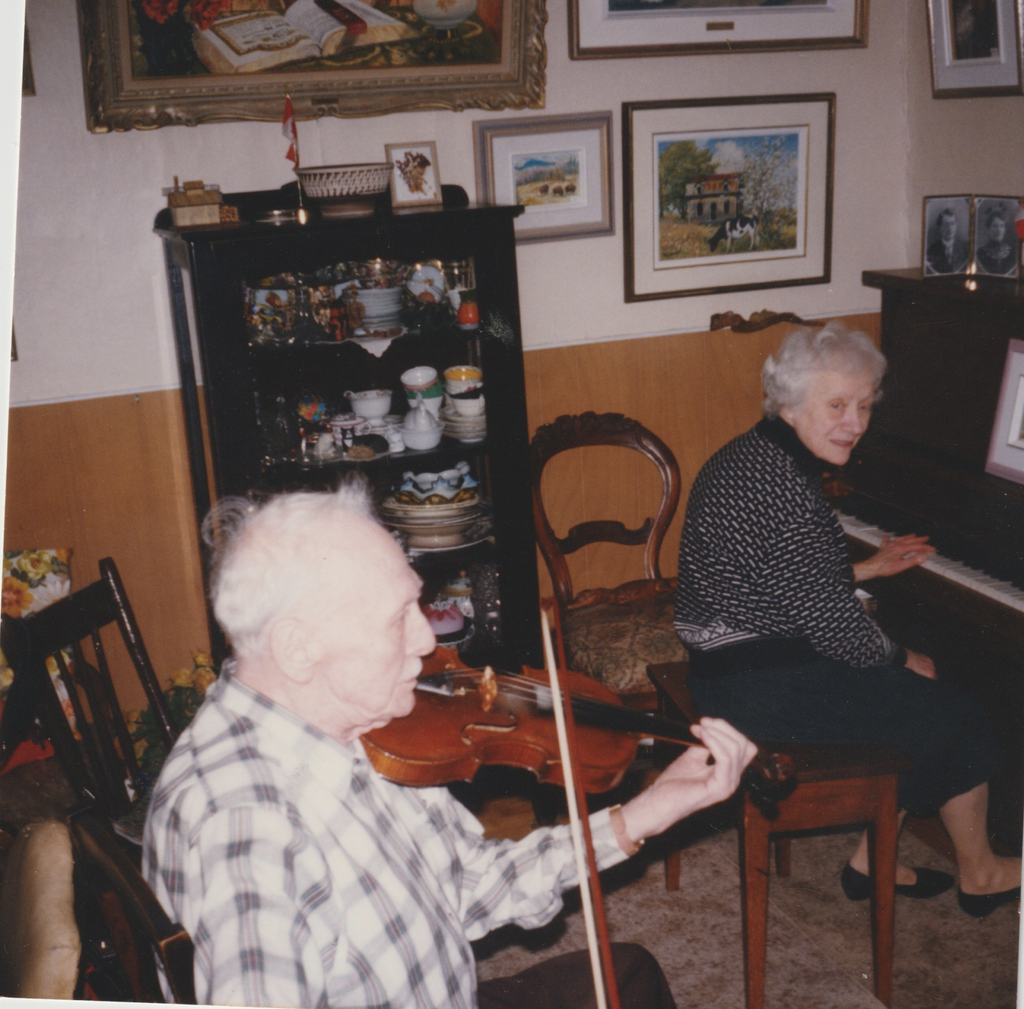
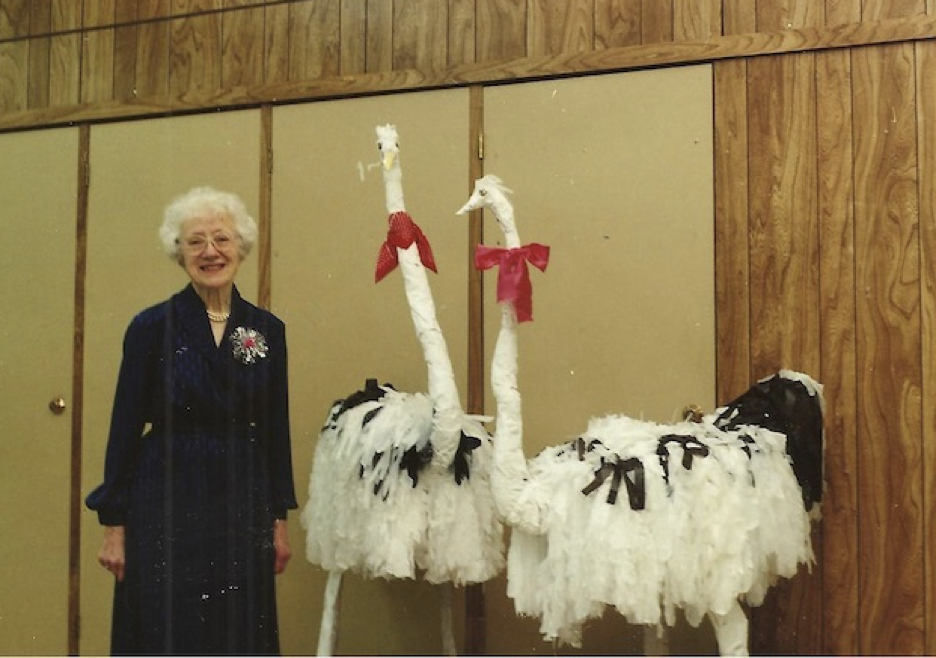
March 30, 1992 Linda presenting one of her paintings (The 4th Chutes) to His Excellency Goveneral Ray Hnatyshyn
Linda comments:
Being self-taught I worked through the late 30’s, 40’s and 50’s with little exchange of ideas and activities current in the mainstream arts community.
I painted to please myself with direction from a then well known artist, Oscar de Lall.
Later on encouragement and support came from other sources such as Eaton’s art department.
Twenty four years ago I joined the co-founders, A. Ferwornw and Mrs. D Rowan ate be the first become a member of the Rawdon Artists Club, something I am very happy about.
As a member of the Women’s Art Society for over a decade, my works have always been accepted for display at their annual show.
Nine years of exhibiting at Coin des Arts at both Central and Windsor train stations was a rewarding experience as four more years in the Foyer des Arts on Eaton’s 9th floor galleries.
A demand from the Royal Art Gallery on Sherbrooke Street west for paintings of Quebec villages I began painting in more villages in the surrounding area.
Later on I exhibited at the Rolland and Gemst Galleries, also in Montreal.
Eleven awards reminded me of pleasant reminders of the past and a hope that the future will provide more time for creative work.
Linda was an early and active member of Rawdon Artist Circle. She was elected president and served well into her 90 years of age.
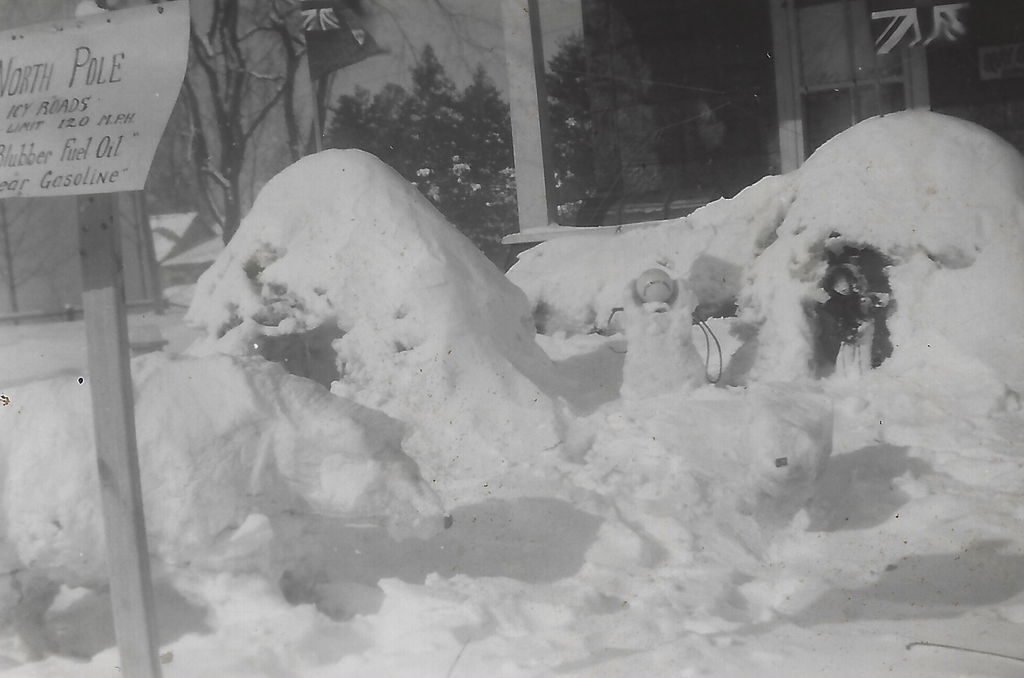
Linda created a sculpture for the annual Winter Activities. In the 1952 Winter Carnival Linda Blagrave’s entry, The North Pole, won a prize. The sculpture included two igloos complete with Inuit, polar bears and cubs, sleigh dogs, even an Arctic sky.
Sadly a January thaw quickly destroyed the many sculptures lovingly created throughout the village, including Linda’s North Pole.
an Arctic sky.
Linda was active in community organization and events well into her 90th years.
She was a member of Rythmiers who played the Rawdon Sunshine Dancers.