
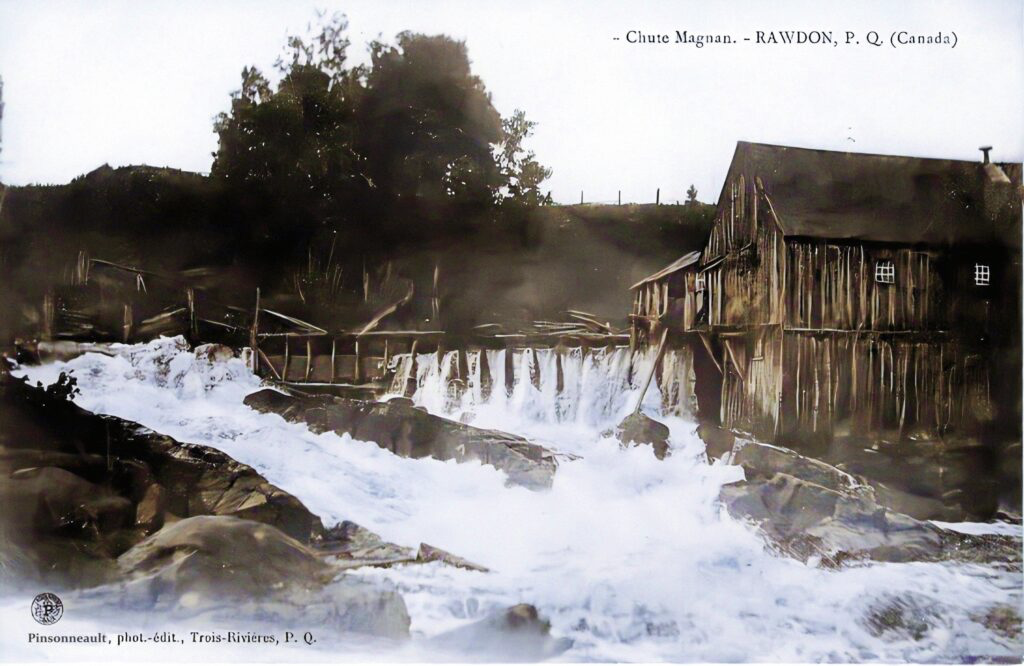
The mill above, originally known as the Archambault Mill was on lots 15 & 16 of the 5th range, was near the edge of what became the village.
This postcard, recently coloured, is the earliest photo of a Rawdon mill that I have found. It was was mentioned in George Copping’s in his journal in 1836.
Mills, both flour and lumber, were of prime importance to the community. The many rivers in the township allowed for several mills in the area. As previously noted, Dugas and Manchester had mills in the lower ranges. Archambault, Boyce, and Mason had mills on the outskirts of the village. Later several more mills were added to the number, Magnan, Boulanger, Morin all had mills.
Circa 1817, at least 3 mills had been built on the Red River alongside ranges 1 and 2, by Philemon and Isaac Dugas and Peter (Pierre) Richard. Philemon bought his two associates out and now had 3 mills. Unfortunately I have found no sketches of these early mills.
These mills on the lower ranges ranges served the area up to the 7th range for over the next 75 years. On his father’s death Philemon’s son, Firmin, had inherited the mills. March 16, 1899 Firmin, now a deputy of the federal government representing Montcalm, died unexpectedly. Firmin and Mary Ann Coppings’s first son, Louis, now a federal deputy, inherited the mills.
Not being interested in milling he sold the mill to his cousins, Samuel, George, and William Lord.
The mills re-opened in 1902 after the Lords had dug the channel to the mill deeper along 7 arpents to augment the power for the water wheels.
THE BOYCE MILL
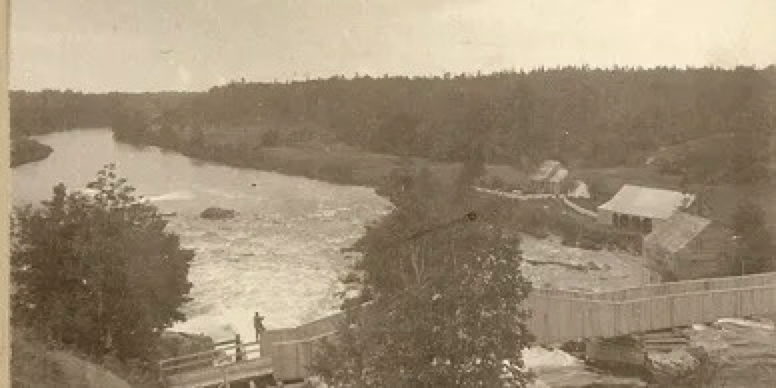
This grist mill, known as Boyce’s Mill, on the Ouareau River, below Magnan Falls, was purchased in 1866 by William Smith from the estate of Charles Grant. William died in 1872, his widow, Ann Boyce, ran the mill until the mortgage was paid. In 1891 the census lists the farm and mill as being operated by Richard Boyce, Ann Boyce’s nephew. This family photo, circa 1890, shows the bridge, (built by Richard) the mill, farm buildings and house.
THE MASON MILL
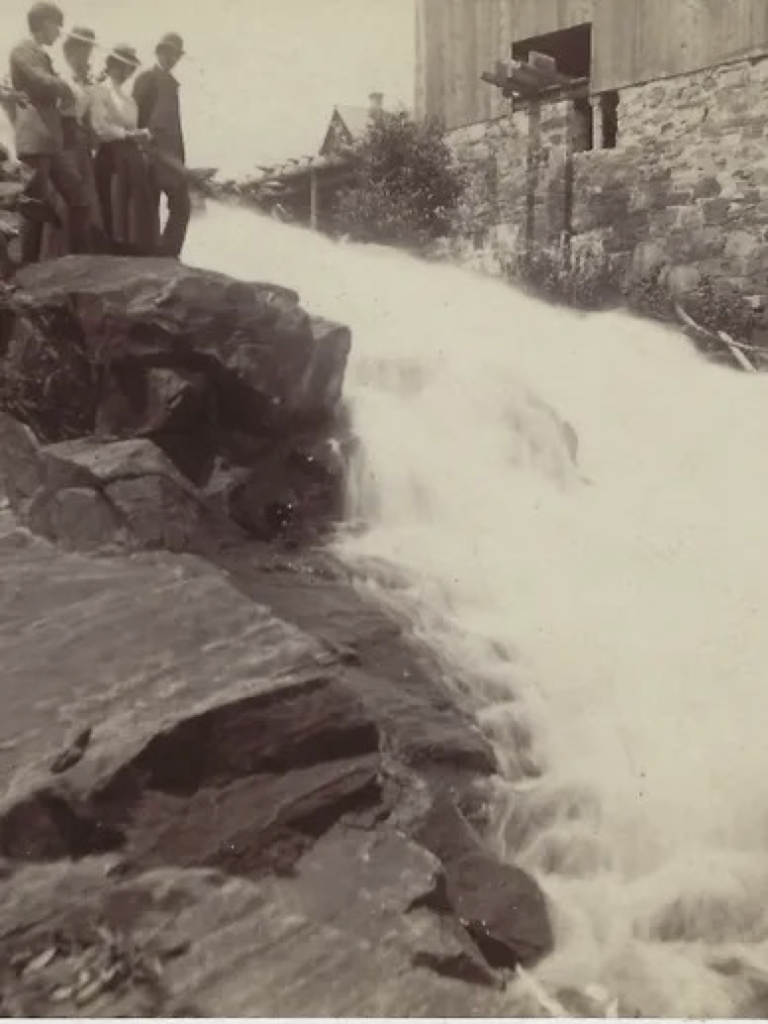
The Massue Mill
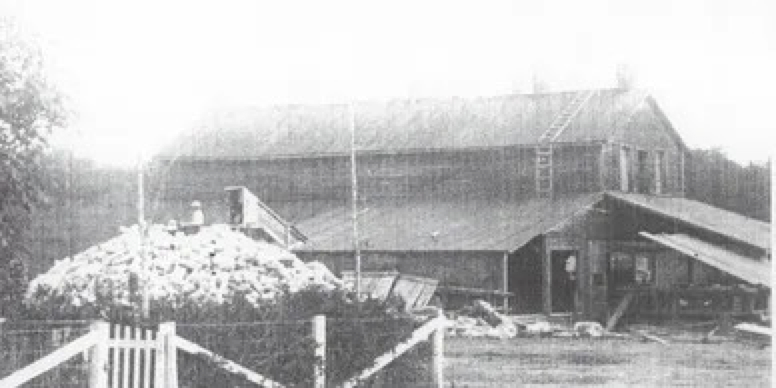
Massue Mill was at the corner of 4th and Metcalfe where the Cenotaph now stands. Built on the bank above the Red River, the sawdust was sent over the bank where it colected making a large sawdust cone running up to the mill. A fire caught in the sawdust and was said to burnt for 3 years.
Caves carved into the sawdust pile was a strong attraction to the young boys boating along the Red River. Parents saw their interest in the sawdust cave as vary dangerous and were warned not to stray close to the caves. But then, as now, had no concept of mortality and secretly continued to play in the caves.
June 5,1887 tragedy struct the community when 15 year old Thomas Cameron was one of three boys drowned while playing in the caves created by the river washing into the pile of sawdust.
It is interesting to note that this mill produced spindles, decorative rails for stairs, legs for furniture, etc.
Rowan’s Mill
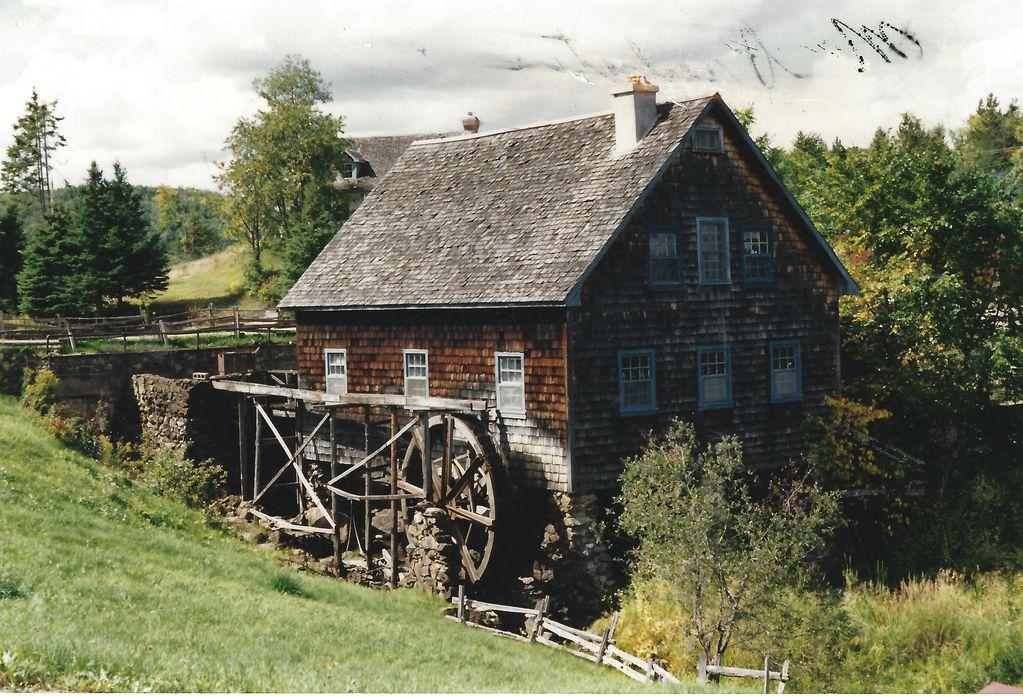
This photo of Rowan’s Mill was taken at Canadiana Village where it was restored.
Rowan’s grist mill, a local mill was moved to Canadiana in 1967 as a centennial project. Two dining rooms inside held 75 guests. Downstairs was a large dining area, upstairs there was smaller one.
A beautiful Rosewood buffet donated by a friend greeted diners on entrance to the dining room. It held an ample supply of the delicious lunch menu. If one was not hungry when they arrived the sight and smells of the food on the buffet certainly whetted the appetite.
Famous for the ambiance and the food served it was a unique venue for weddings and receptions of all types. A group from Japan to film on site was so impressed by their visit the Moores decided to give them a “real send off.”
Within a couple hours they had organized an evening for a “typical” 19th century gathering. Local dancers and musicians were summoned and the old mill rocked with the Japanese visitors joining in the dancing with great gusto.
THE COPPING MILL
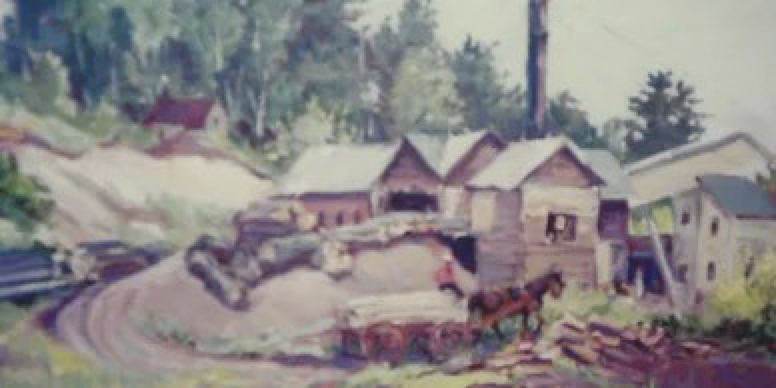
This was an early steam powered mill in Rawdon. As an engineer Selwyn had an engineering permit that was required to operate a steam engine. Selwyn installed and repaired steam engines at at various lumber camps throughout Quebec without sufficient water to power mills.
THE BELANGER MILL
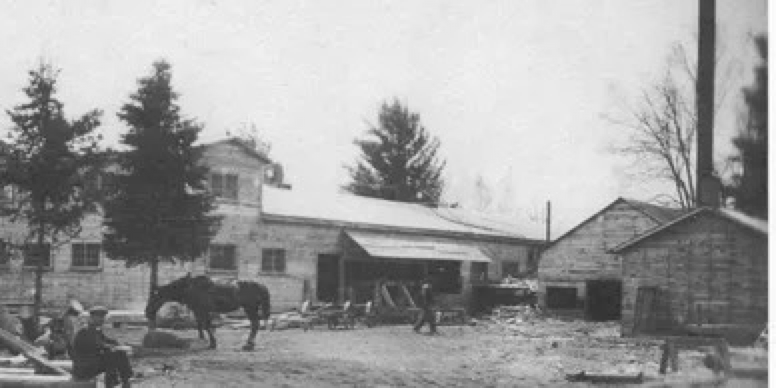
This was the last mill built in Rawdon. I have found very little information for this one. I would appreciate hearing from anyone who can contribute to this story.