
In 1791 and the British colony was divided into two distinct sectors, Upper and Lower Canada, divided by the Ottawa River. Each sector had a Governor, an Executive Council, Legislative Council and a House of Assembly. These bodies were appointed by the king, Governor and Executive Council’s term being indefinite; the Legislative Council was appointed for life. This latter council served as legal advisers to the legislature.
Settlement in the Canada’s was strongly encouraged by the British government. One reason being British settlers annually used $40 worth of British imports to the colonies, 2/3 more than the average British subject required if he remained at home. This fact was very interesting to a country on the brink of bankruptcy due to a prolonged war with France as well as the consequences of the ongoing Industrial Revolution.
Another strong influence was the fear of invasion by the newly formed United States. There was a well grounded fear that these newly independent colonies had an eye on their neighbour to the north. It was essential for Britain to have a ready population if an invasion arrived.
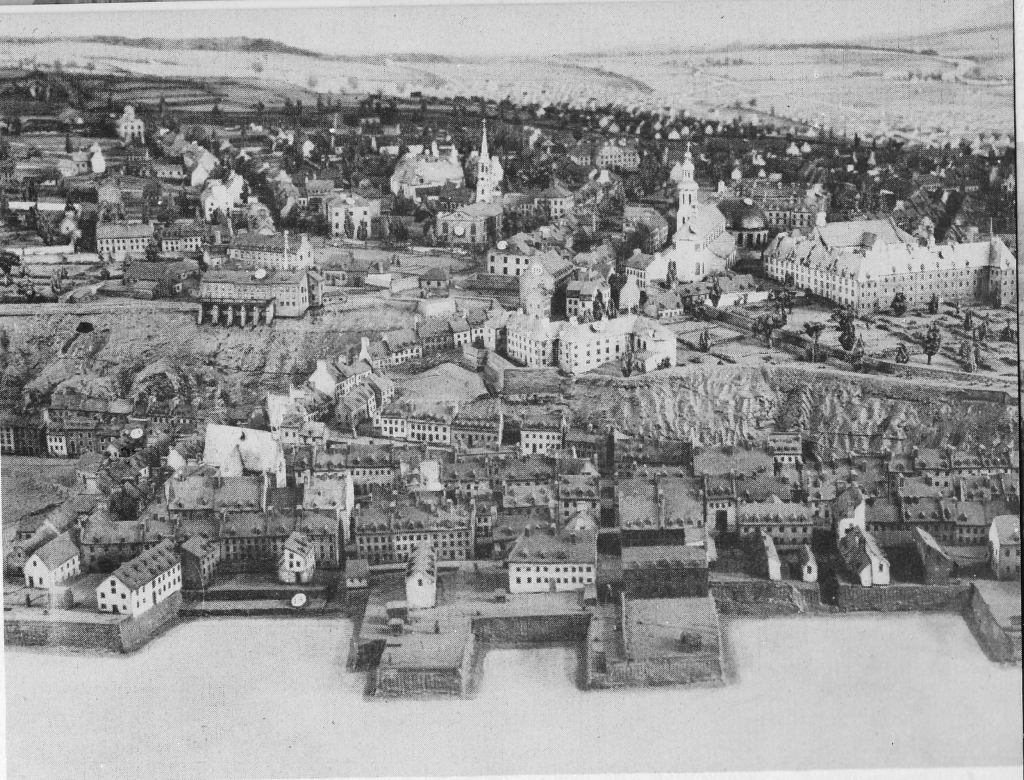
The main towns of Lower Canada were Québec City with a population of 15,000, Montréal with approximately 11,000, Trois Rivieres with a little over 1000, population and William Henry (Sorel) with less than 2000 people.
Fort William Henry or Sorel, as it was later called, had been built in 1665 where the Chambly River emptied into the St. Lawrence. The English later established a military base on the site. Ship building was the main industry although there were several very productive farms, as well. It had both a Catholic and Protestant church.
In Rawdon several land grants were given to military personnel (or their widows) stationed at William Henry possibly in the hope these people would settlle granted land. None did, but the land was sold to others wishing to settle in the area.
In accordance with the 1757 agreement, Quebec Civil Law was based on the French Legislation but Criminal Law was of English origin.
Lower Canada was divided into five legal circuits, Berthier being the seat for the Rawdon area.
At this early stage the Church of England in the Canadas was governed by the Lord Bishop of Québec. In Lower Canada the Lord Bishop had one archdeacon with some 30 clergymen and a like number of churches under his jurisdiction.
The Church of England was supported by parliamentary aid as well as the Church Missionary Fund. The Rev. Burton, the first clergyman in Rawdon, was sent by the Missionary Society.
In the new country government funding through taxes and duties were minimal. There was an import duty, and a liquor duty. Anyone selling liquor, tavern keepers, and pedlars were subject to an annual licensing fee. Other government revenue was from fines and the sale of crown lands.
Although the St. Lawrence River was well traveled both by passenger and freight, there was a relatively well-maintained road between Québec City and Montréal running along the North Shore of the St. Lawrence. This road ran along the north shore of the St. Lawrence in front of the farms that hugged the shores of the river. Today this road is a lovely, scenic drive known as “le chemin du roi”. Some of the original houses are still standing and well restored. Little villages, each with a huddle of business establishments and a church, are encountered about every 4 or 9 miles.
Three Rivers, the halfway point between Québec and Montréal was an important city with its port shipping lumber as well as products from Les Forges de St. Maurice which was for many years the most important iron works in North America.
Berthier, a usual approach to the Rawdon Township from Québec City, was 135 miles along the “chemin du roi”. Rawdon settlers travelling to Québec City used this route, travelling overland to Berthier and proceeding by land or taking a boat from there. James would have used this route when he went to see about the deeds for the farm. Philemon Dugas also used this route on his rather frequent trips to Quebec City to try to bolster interest in Rawdon’s forestry industry. At Berthier and there was and still is a ferry crossing to William Henry (Sorel de Tracy).
English settlements along the north shore of the river began farther inland at the edge of the French settlements. Here the land rose to the mountains. The first two ranges of Rawdon, later mostly ceded to neighbouring parishes as they became established, were relatively flat land. The 4th range upwards is a constant climb into the mountains.
Areas settled under the French regime were seigneuries divided into farms 3 arpents wide by 30 arpents (approx. 4|5 of an acre) back. The buildings were on the front of the lots. This system had the advantage of alleviating the sense of isolation so often experienced by newcomers in a strange and hostile environment. It also offered protection from marauding natives both for the women in the homes and the men working in the fields.
Under the English regime townships of 10 square miles were divided into lots 10 acres wide, 20 acres back, about 60,000 acres Grants were usually in 1/2 lots, 100 acres, 10 acres wide, 10 acres back.